

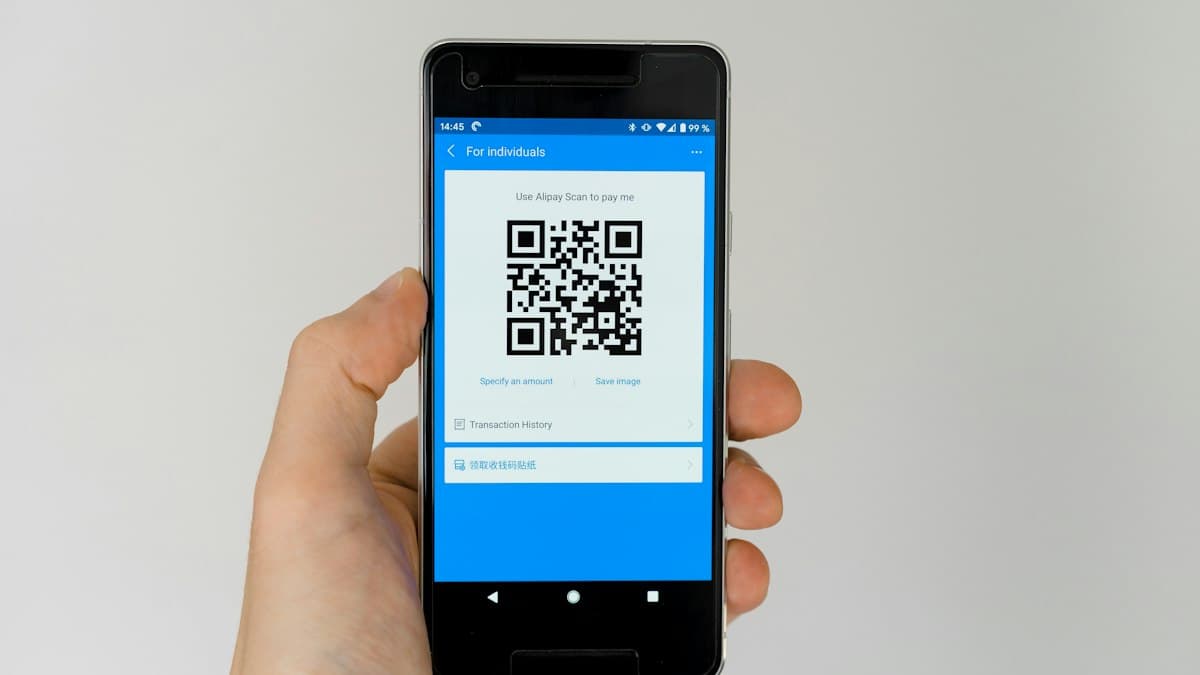
India's first charge on UPI merchant payments will not start on schedule. On 13 October, two days before a 0.4% merchant discount rate (MDR) was due to apply to larger person-to-merchant payments, the National Payments Corporation of India (NPCI) deferred it until after Diwali and said a new date would be notified separately (The Week).
In the US, the Office of the Comptroller of the Currency (OCC) moved the other way on 21 October. It issued the first final rule from a federal regulator under the GENIUS Act, the 2025 law that creates a federal regime for payment stablecoins (OCC; CoinDesk). The two stories are unrelated in substance, but they sit at opposite points. India has written its fee terms and lost its start date. The OCC has fixed its terms to a start date set in law.
India: the UPI fee, as written
NPCI circular NPCI/UPI/OC-No.237/2026-27, dated 15 September, introduced an MDR of up to 0.4% on UPI person-to-merchant payments above ₹2,000, effective 15 October, according to Paytm's disclosure to the stock exchanges the same day. The filing says customers are not charged.
The finance ministry's statement on the framework fills in the detail. The fee is capped at ₹300 for payments of ₹75,000 and above. Payments above ₹2,000 in railways, telecommunications, insurance, fuel and agricultural inputs carry a flat ₹5 instead, and payments to mutual funds, stockbrokers and securities dealers carry 0.02%, also capped at ₹300. Small merchants receiving up to ₹1 lakh a month through UPI QR codes keep zero MDR, and person-to-person transfers stay free at any amount. Banks have been told to ensure merchants do not pass the charge on to customers. The ministry said the MDR would apply to about 4% of merchant transactions, and that an amount equal to 5% of collections would go into a fund to promote UPI adoption among small merchants.
The money stays inside the payment chain. The ministry said MDR is neither a tax nor a charge collected by the government or NPCI, and that it is shared among banks and payment app providers. Its statement gives no percentages. IBTimes India described a reported split of 40% to the customer's bank, 30% to the acquiring bank or payment gateway, 20% to the UPI app and 10% to the sponsor bank.
India: a court case and a pause
On 28 September, a Supreme Court bench led by Chief Justice Surya Kant declined to stay the levy on a public interest petition filed by advocate Anjan Datta. It issued notice to the Centre, the RBI and NPCI, and sought the government's affidavit on the legal basis for the charge (Outlook India). The petition challenges the statutory basis of the levy, the ₹2,000 threshold and the different treatment of UPI and RuPay debit card payments. Additional Solicitor General N Venkataraman told the court the MDR was neither a tax nor a government fee, and that the government would receive no part of it.
The deferral came from NPCI's UPI and Services Steering Committee, which took the decision "keeping in mind the festive season" (The Week). NPCI's release did not say whether the framework would change, whether specific merchant categories would be exempted, or whether merchants could pass the charge on. It said only that MDR on "select" person-to-merchant transactions would follow after Diwali, on a date to be notified.
For merchants, nothing changes yet in what they pay. For issuing banks, acquiring banks and UPI apps, the deferral leaves a revenue line with a written rate card, no start date and a legal challenge still pending.
US: the first final stablecoin rule
The GENIUS Act, signed on 18 July 2025, gave the OCC, the Federal Reserve, the FDIC, the NCUA and Treasury one year to write implementing rules. None finished in time. On 18 July 2026 the main rule packages were still proposals (The Block).
The OCC's final rule takes effect on 18 January 2027, the same day as the Act. It sets requirements on reserve assets, redemption, risk management, audits and reporting, custody, applications, foreign issuers and a capital and operational backstop. It applies to national banks, federal savings associations and federal branches and their subsidiaries, foreign payment stablecoin issuers, nonbank firms seeking federal qualified issuer status, and state qualified issuers the OCC oversees. Bank Secrecy Act, anti-money laundering and sanctions rules are left to a separate rulemaking with Treasury. In the OCC's announcement, Comptroller Jonathan Gould said the rule sets "strong standards for reserve backing, redemption, and risk management."
On yield, the rule keeps the Act's ban on issuers paying holders "solely in connection with the holding, use, or retention" of a stablecoin, but drops the rebuttable presumptions in the proposal that treated specified reward arrangements as violations. The OCC said it will "apply the language of the statute to the facts and circumstances of any particular arrangement," and it declined to presume that rewards programs predating the Act comply (CoinDesk).
The agency has not yet opened applications. A companion bulletin says it will start accepting them once the Office of Management and Budget approves the application forms. From 18 January 2027, issuing a payment stablecoin in the US without approval carries criminal penalties. The OCC said it generally expects to grant existing issuers with a substantially complete application pending a waiver from that approval requirement, but it has found no general reason to waive other requirements, since issuers have had 18 months to prepare.
The OCC is the first regulator to finish. The FDIC, the Federal Reserve and Treasury still have GENIUS Act rulemakings open, and CoinDesk reported that not all required rules are likely to be in place by January.
What to watch
In India, the next markers are the government's affidavit in the Supreme Court case and NPCI's announcement of a post-Diwali start date. In the US, they are the date the OCC opens applications, how many existing issuers file before 18 January to qualify for a waiver, and whether the FDIC, the Federal Reserve and Treasury finalize their rules before the Act takes effect.
Sources
- The Week. "NPCI defers 0.4% UPI merchant fee until after Diwali." 13 October 2026. https://www.theweek.in/news/biz-tech/2026/10/13/npci-defers-upi-mdr-until-after-diwali.html
- One 97 Communications (Paytm). Disclosure to BSE and NSE on NPCI circular NPCI/UPI/OC-No.237/2026-27. 15 September 2026. https://nsearchives.nseindia.com/corporate/PAYTM_15092026234600_SEDisclosureNPCICircularsd.pdf
- Press Information Bureau, Ministry of Finance. "UPI Continues to Remain Free for Peer to Peer Transactions and 96% of Merchant Transactions." 15 September 2026. https://www.pib.gov.in/PressReleseDetailm.aspx?PRID=2310586&lang=1®=3
- IBTimes India. "UPI MDR explained: How new 0.4% collected will be split by banks, payment apps." 25 September 2026. https://www.ibtimes.co.in/upi-mdr-explained-how-new-0-4-collected-will-be-split-by-banks-payment-apps-906457
- Outlook India. "UPI MDR Row: SC Refuses Stay, Seeks Centre's Reply Ahead Of Oct 15 Rollout." 28 September 2026. https://www.outlookindia.com/national/upi-mdr-row-sc-refuses-stay-seeks-centres-reply-ahead-of-october-15-rollout
- The Block. "US regulators miss GENIUS Act's one-year deadline for final stablecoin rules." 18 July 2026. https://www.theblock.co/post/408843/us-regulators-miss-genius-acts-one-year-deadline-for-final-stablecoin-rules
- Office of the Comptroller of the Currency. News Release 2026-92, "OCC Advances U.S. Digital Asset Leadership with Final Rule to Implement GENIUS Act." 21 October 2026. https://www.occ.gov/news-issuances/news-releases/2026/nr-occ-2026-92.html
- Office of the Comptroller of the Currency. Bulletin 2026-50, "GENIUS Act Regulations: Final Rule." 21 October 2026. https://www.occ.gov/news-issuances/bulletins/2026/bulletin-2026-50.html
- Office of the Comptroller of the Currency. Bulletin 2026-51, "GENIUS Act: Waivers and Application Submission Guidance." 21 October 2026. https://www.occ.gov/news-issuances/bulletins/2026/bulletin-2026-51.html
- CoinDesk. "OCC's final rule to start fresh in weighing stablecoin rewards against GENIUS Act ban." 21 October 2026. https://www.coindesk.com/policy/2026/10/21/occ-s-final-rule-to-start-fresh-in-weighing-stablecoin-rewards-against-genius-act-ban