

Mistral AI is in early talks to raise roughly €3 billion ($3.5 billion) at a €20 billion valuation, according to Bloomberg and TechCrunch reports published June 12, 2026. The round would nearly double the €11.7 billion ($13.7 billion) valuation Mistral secured in its September 2025 Series C, which was led by chip equipment maker ASML (CNBC, 2025). The timing matters: the new funding talks follow, by two weeks, Mistral's first attempt to sell something other than a general-purpose chatbot.
From foundation models to factory floors
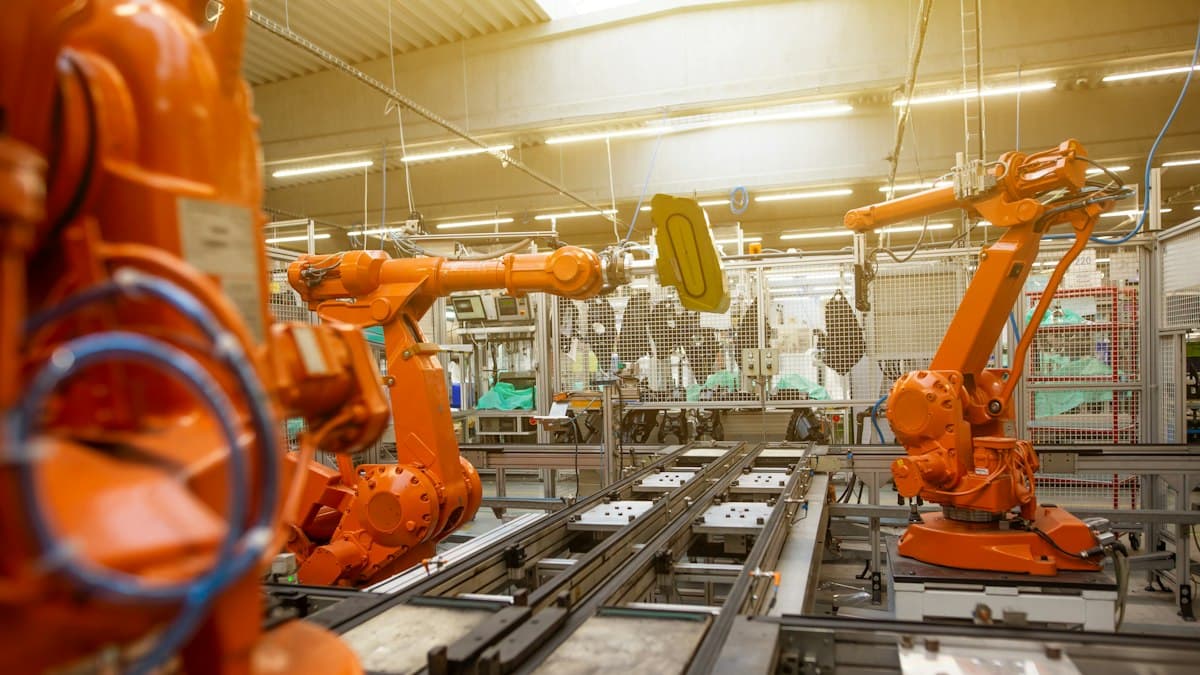
On May 28, 2026, at its first flagship conference in Paris, Mistral launched "Mistral for Industrial Engineering," a product line built around physics simulation rather than text generation (Mistral AI, 2026). The company named Airbus, BMW, EDF and shipping group CMA CGM as launch customers, according to The Next Web and Value The Markets coverage of the event.
The technical core came from an acquisition, not internal research. Mistral agreed on May 23, 2026, to acquire Emmi AI, a Vienna-based startup that had raised $15 million in 2025 to build models simulating physical processes such as airflow, heat transfer and material stress, according to AIwire and The Decoder. More than 30 Emmi AI researchers and engineers joined Mistral's applied AI team as part of the deal. The purchase price was not disclosed.
What changed here is the target buyer. Mistral's earlier products, including its agentic tool Vibe, compete for the same enterprise software budget as OpenAI and Anthropic. Industrial Engineering competes for a budget line that has historically gone to simulation vendors like Ansys and Dassault Systèmes, not AI labs. Airbus and BMW are not buying a copilot. They are buying a tool meant to sit inside design and manufacturing workflows that currently run on physics-based simulation software.
A capacity move to back it up
The same Paris event included an infrastructure announcement: a new 10-megawatt inference facility at Les Ulis, in Essonne, scheduled to open in the third quarter of 2026 (Mistral AI, 2026). Mistral described the site as a way to control its own inference capacity rather than depend entirely on cloud partners, a supply chain concern that has shaped decisions across the sector this year.
Read together with the industrial launch, the facility signals a company trying to own more of its stack at the exact moment it is asking new investors for money to do it. That sequencing is not unusual for a lab burning cash on both model training and new go-to-market motions. It does mean the round has a fairly specific story to tell prospective investors. Mistral now has named enterprise customers outside the AI-native software category.
What the funding talks say about the enterprise bet
Neither Bloomberg nor TechCrunch reported the round as closed. Both described it as talks in early stages, with terms that could still change, and both cited Mistral's existing investor base, including Nvidia, Salesforce Ventures, ASML, Andreessen Horowitz, Bpifrance, General Catalyst, Index Ventures and Lightspeed, as likely to remain involved. SiliconANGLE's reporting on the same figures noted that the raise was explicitly tied to funding the "physics AI push," rather than to general model scaling.
If the round closes near the reported €20 billion figure, it would value Mistral at roughly 1.5 times its valuation nine months earlier, a faster re-rating than most European AI companies have managed. It would also make the Emmi AI acquisition, disclosed without a purchase price, look retroactively cheap relative to what it appears to have unlocked in investor interest.
What to watch next
Mistral has not disclosed contract values for the Airbus, BMW, EDF or CMA CGM deployments, so it is not yet possible to say whether Industrial Engineering is generating meaningful revenue or functioning mainly as a proof point for the funding conversation. The next concrete marker is whether the funding round closes at or near the reported €20 billion figure, and whether Mistral discloses usage or revenue detail from its industrial customers when it does.
Sources: Bloomberg · TechCrunch · SiliconANGLE · Mistral AI · AIwire · The Decoder · The Next Web · CNBC